Showing posts with label Castlevania. Show all posts

Saturday, August 27, 2016

Castlevania: The Adventure (1989)

Image shamelessly stolen from the Castlevania Wikia page.
When I was a kid, this was the baddest looking box art in all the land
when it came to Game Boy games. And by bad, I mean AWESOME.

Nostalgia can be a very powerful force.  It can make adults look back fondly on all sorts of things that, viewed objectively, probably aren't as great as we remember them.  For a child of the 80's, that can be almost anything.  From VCRs and teased hair to classic cartoons and our favorite movies and video games, there are times when it's hard to take a step back and look at those old favorites with a more critical eye.  Sure, that one Poison album might be one of your favorites of all time, but musically, does it still hold up?  What about your favorite childhood cartoon...could you watch it today without cringing or thinking it's nothing but pure cheese?


Seeing that Castlevania logo on the little screen was a sight to behold.

Now think about your favorite video games as a child.  Sure, some of them probably stand the test of time.  But for every Super Mario Bros or Contra, there's always a handful of games that we may still hold in high regard and still have much affection for.  If we could set aside our own memories and youthful experiences, would we still hold those works in the same esteem?  For me, one of those games is Konami's Castlevania: The Adventure on the Game Boy.


Notice the flaming end of the whip - that little fireball is destined for
the "mud man" enemy, otherwise known in the manual as "Madman".

I probably mentioned this in my first article, but I'll recap for context.  My parents wouldn't let me own a games console, because they said (rightly so) that I would monopolize the TV, as the family had just one.  Thus, if I wanted to play something other than simple early PC games, I needed to save my money and buy a Game Boy.  I dutifully saved my allowance, and upon my 13th birthday, my parents took the money I saved and bought me the Game Boy, and then bought Castlevania: The Adventure as my birthday present that year.  1990 became a seminal year for me as a gamer, and cemented the love for the hobby as I poured all my free time into playing on that little grey brick.  Much of that time was spent on Tetris, to be sure, but Castlevania: The Adventure got a lot of play that first year, and for good reason.  Having played a couple of the NES Castlevania games, it was a marvel to me that they could take that experience, and downsize it for the Game Boy screen, albeit somewhat reduced in terms of game mechanics.  Even so, it was a wondrous thing to 13-year old me.


The design team liked to use this tactic a lot - put a candle out of
reach to all but those who would keep the fireball power-up.

Looking back at those times, I have fond memories of visiting my grandparents at their house, taking the Game Boy with me, and sitting between my grandfather's rocking chair and the bookcase against the wall, huddled in the corner underneath his reading lamp, playing Castlevania: The Adventure while listening to my grandparents and my parents talk.  I would occasionally steal away to the kitchen for a jelly bean, or gladly turn it off for a bowl of homemade ice cream, but I whiled away many a Friday evening in just that way. I remember the feeling of victory every time I would make it past Stage 2, and the even greater sense of accomplishment when I had bested Stage 3.  I also fondly remember beating Dracula at my grandparents' house, and gleefully showing my parents that I had finally beat the game, after months of chipping away at it.  Not that they cared, but as a young gamer, it was a triumphant moment.


At first, the Stage 02 "Under Mole" boss is a huge pain. Once you
know where to stand and when to whip, it becomes no sweat.

On the surface, the game looks excellent.  The development team that handled this game certainly got a lot out of the Game Boy during its formative first few months, with good graphics that included nice layered backgrounds, a good use of the Game Boy's 4-shades of green in terms of shading, background elements, and enemy/item recognition, and an overall atmospheric aesthetic that recalled earlier games in the series, but having its own unique flavor.  The sprite for Simon Belmont's predecessor, Christopher Belmont, is recognizable in its basic form, and animates well enough, in similar fashion to the NES classics it is loosely based upon.  The familiar candles flicker in a simple, but effective 2-frame animation, and when you whip enemies, they die in a satisfying little burst of flame.


A descending ceiling of spikes is not my idea of a good time!

The soundtrack is one of the highlights of the game.  Hats off to composers Shigeru Fukutake, Norio Hanzawa, and Hidehiro Funauchi for their work on the game, because the music here, particularly that of the first 2 stages, is impeccable.  The melodies are memorable and stay with you, long after you power off your Game Boy.  The sound effects are also well done, with a nice whip sound, and a satisfying little "crunch" sound when you destroy a candle or vanquish a foe.  The coin pickup and power-up sounds are all familiar, and hearken back to the halcyon days of 8-bits and game design teams using basic hardware to make excellent sound.  This game is truly one of the highlights of early Game Boy titles when it comes to sound design.


Castlevania: The Adventure State 01 music. Stick this in your ear
holes and tell me it doesn't get stuck in your head. I dare you.

Game play is basic, with you controlling Christopher Belmont, running (or sauntering, more on that later) right to left, or sometimes left to right, whipping floating candlesticks for power-ups, and enemies in your path.  Unlike the first NES Castlevania game, there's no sub-weapon here, so rather than hearts giving you ammo for a secondary attack method, they restore life, like you would normally see in other games.  Coins are strictly for points, and littered around the game, you'll stumble upon the occasional 1up, as well as strategically placed whip upgrades, in the form of a dark sphere.  Your basic whip is a thin, stringy thing, and often takes 2 or more uses to kill anything.  Upgrade once, and it's a thick, braided powerhouse with a ball at the end.  Upgrade a second time, and your whip can suddenly throw fireballs.  It's an interesting twist to the 2-upgrade system introduced in the first game, and it gives the player options in terms of eliminating obstacles, as well as reaching some candlesticks.  Each time you get hit, you lose one level of whip upgrade, so two hits and you're back to the thin whip.  Get hit enough to drain your lifebar, and it's a trip to the woodshed for Mr. Belmont.  Thankfully, you get 3 lives to start with, and you can earn an additional life at 10,000 points, and more after each successive 20,000 point total.  You also get a small handful of continues, in case you die.  Let's face it: unless you're a Castlevania wunderkind, you'll die - a lot.


Not all bosses in the game are very true to the Castlevania aesthetic,
but this rib cage-bearing bat creature certainly is.

The chief complaint leveled against this game is its speed, or rather, the lack thereof.  As I mentioned previously, Christopher Belmont saunters along at a snail's pace, and everything in the game seems to follow suit.  Granted, for the game's difficulty, that helps a little, but it certainly counts as a negative.  I don't happen to think it's quite as sluggish as some would say, but I will concede that it hampers the game somewhat.  Secondly, the game's difficulty is quite high.  This is offset somewhat by there only being 4 stages, but there are moments where you're almost guaranteed to get hit by an enemy projectile (like those wretched bouncing balls spit out by the Punaguchi).  Some spots require near pixel-perfect jumps, and to expect that on the DMG's tiny screen is pretty harsh.  It can be done, but it sours the experience.  In addition, the aforementioned Punaguchi's make things very difficult in Stage 2 and 3, and if you don't have the timing down of when they spit out the large attack balls, or know where to stand so you can whip them, you'll almost certainly take at least one, if not two hits, as there's no way to avoid taking damage otherwise.  Worse yet, if you take a hit or two, and are relegated back to the weakest whip, it takes 4 whips to kill them.  These vile creatures rank up there with the bats in the original NES Ninja Gaiden as some of the most annoying, hard to avoid enemies out there.


Stage 03 starts out with background armor suddenly springing forth
to take out Christopher Belmont, so stay on your toes. Also, the
music in this stage makes great use of stereo separation and panning.

Playing this game again, I start to see my love and nostalgia for it slowly erode as I'm batted around by bouncing balls (yes, the game has knockback like its predecessors), expected to make pixel-perfect jumps, and in a constant state of frustration due to the game's less than stellar design.  I still contend that it's not quite as horrible as some make it out to be, but I'm beginning to see that this adventure isn't quite the paragon of early Game Boy action platforming that I originally thought it was.  Konami eclipsed this later with the sequel, as well as the Contra game Operation C, as well as other later Game Boy releases.  The game becomes a blurry mess on the original Game Boy screen, and it makes me wonder how I ever endured playing it with all that blur.  I tried to play it again on the DMG recently, and was shocked at just how blurry it was.  Perhaps I've been spoiled with the Game Boy Color and Game Boy Advance all the years I've owned them, but the system this game was designed for certainly shows its age when you play a game like this that requires a sharp eye and great timing and reflexes.  It makes for a very difficult experience.


I lost many a life here at this spot as a child.  Sadly, it's still the spot
that claims my stock of extra lives, mostly because I suck at the
timing of these spiked beams.

Ideally, if one is to play this game today, it's via the Super Game Boy or Game Boy Player, or perhaps even on the 3DS via the Virtual Console.  Not that I'm recommending that course of action.  Sadly, I can't even give this a casual recommendation, even as much as I played and enjoyed it as a kid.  It's fraught with too many design and execution flaws that the game's good graphics and excellent soundtrack can't rise above.  Loose carts aren't expensive, by any means, and you could pick this one up for under $10, but unless you're nostalgic for when games kicked your butt 10 ways from Sunday, or are a complete masochist looking for a short challenge, I'd skip this one.  Definitely a "try before you buy" game in today's context.  Sadly, I must own up to having seen this game through "nostalgia goggles" for the last couple decades, and admit that it's just not that good.


Tuesday, March 24, 2015

Introduction to the Game Boy Guru


My name is Josh, and I've been playing video games, in some form, since I was 5 years old.  I first experienced the thrill of video games at the ripe young age of 5, at a family get together.  My uncle brought his Atari 2600 console, and between Pac-Man, Combat, Battlezone, and a handful of other titles, I was completely smitten with the idea of controlling some small, multi-pixel object on the screen.  Every time we would get together with family, I hoped one of my uncles would bring their Atari 2600.  Every time I'd visit friends, I would beg them to play video games.  And eventually, I would own my own gaming platform, but more on that later.

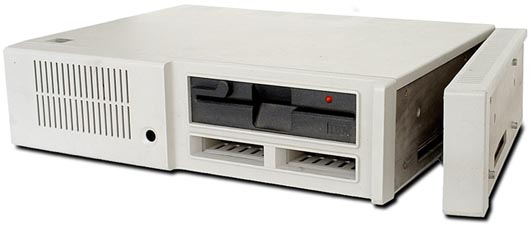
After having been exposed to the Atari 2600 through family members, and then computer gaming through another uncle, my parents bought a family computer.  Mostly, my dad wanted to be able to do productivity stuff with it, but as much time as I could spend on it, I did, playing various shareware games and games designed for the system.  And while we were late to the game, owning the IBM PCjr well after its marketability had all but dried up, that little machine gave me countless hours of joy.  I had adventures with King's Quest, played hoops with One on One Basketball, destroyed property as a Paperboy, and spent hours exploring space and discovering new life forms with Starflight.  Until I started buying games that didn't really work on the PCjr, due to the limitations of RAM (and no hard drive), that computer was the perfect outlet for my early gaming curiosity.


Image shamelessly linked from Old Computers.  Our PCjr had multiple "sidecar"
upgrades to boost it from the stock 128KB to a smoking 640KB of RAM!


My parents wouldn't buy me a dedicated games console, in part, because they said I would monopolize the TV.  They were right, I absolutely would have.  I did have a short stint with my uncle's 2600 when he let me borrow it during part of a summer.  Sadly, the somewhat broken joysticks led me to fits of young gamer rage, which prompted my mom to pack it up and send it back to him.  Once again, I was relegated to just my PCjr, and various friends' consoles, to get my gaming fix.  Thankfully, my next door neighbor had a 2600, NES, and even an original Magnavox Odyssey, and was happy to have me come by any time to play games with him.

There was light at the end of the tunnel, however.  Though my parents wouldn't allow me to own a home console, with only 1 TV set in the house, they did say I could buy a Game Boy, provided I bought it with my own money.  I didn't get that much in allowance money, but I dutifully saved my cash, rather than spending it on G.I. Joe figures, and saved up until my 13th birthday, April 1990.  I bought the Game Boy, complete with Tetris cartridge, and my parents bought me Castlevania: The Adventure as my birthday gift.  It was a glorious birthday, potentially one of the best ever.


Image shamelessly linked from Wikipedia.  This game
was an integral part of my early Game Boy experience.
It was an impressive use of the modest Game Boy hardware.

What followed over the next 2 years was pure childhood gaming bliss.  I bought over a dozen classic Game Boy games: Super Mario Land and its sequel, Alleyway, F-1 Race, Teenage Mutant Ninja Turtles: Fall of the Foot Clan, Kid Icarus: Of Myths and Monsters, Gargoyle's Quest, Final Fantasy Legend, Duck Tales, Dr. Mario, and several others.  I poured a lot of time into my Game Boy, and every time my family went to visit my grandparents or other relatives, I had my trusty Game Boy with me.  When I stayed overnight with friends, we each had our Game Boys with link cables, ready to duke it out in Tetris, Dr. Mario, or whatever other 2-player extravaganza we both had.  I also spent countless hours in my bedroom, fighting and clawing to reach the end of Castlevania and Gargoyle's Quest, and a lot of time perfecting my 4-row technique in Tetris.  It was a magical time.

Sadly, that time came to an end in 1992, when I decided that I absolutely had to have a Sega Genesis.  My parents were buying a new TV, so that opened up the possibility that my younger brother and I could buy their old TV, pool our money together and buy a Genesis, so we could experience the awesome power of the system.  I had already played Last Battle, Golden Axe, and the awe-inspiring Sonic the Hedgehog at a classmate's house, and I knew that was what I wanted.  I still didn't have that much money, however, so I ended up selling my Game Boy and all my games to pay for the Genesis.  I don't regret buying, owning, or playing the Genesis, because it's still one of my favorite systems, and I have a ton of great memories of that.  I just wish, in hindsight, that I hadn't let go of my entire collection of complete-in-box Game Boy titles, especially F-1 Race, because I had the 4-player adapter with it.


Image shamelessly linked from GameTrog.
This Genesis model is the one I sold my
Game Boy to obtain.  I still have the system and
box and still use them today.


Thankfully, I recognized my egregious error 2 years later, and when my best friend from school decided to sell his Game Boy, I bought it from him without a moment's hesitation.  Granted, I didn't get back the boxes and manuals, but I did reacquire some favorites like Tetris, the original Super Mario Land, and Alleyway.  I soon purchased Dr. Mario and Duck Tales again, and was reliving the fun of owning a portable system once again.  I snagged Super Mario Land 2: The Six Golden Coins (still have that complete-in-box!), and loved it, as well as a handful of other games, to eventually get back nearly all the titles I enjoyed just a few short years earlier.  By the time I graduated high school, however, I wasn't gaming much, in part because all my money was going toward dating my girlfriend.

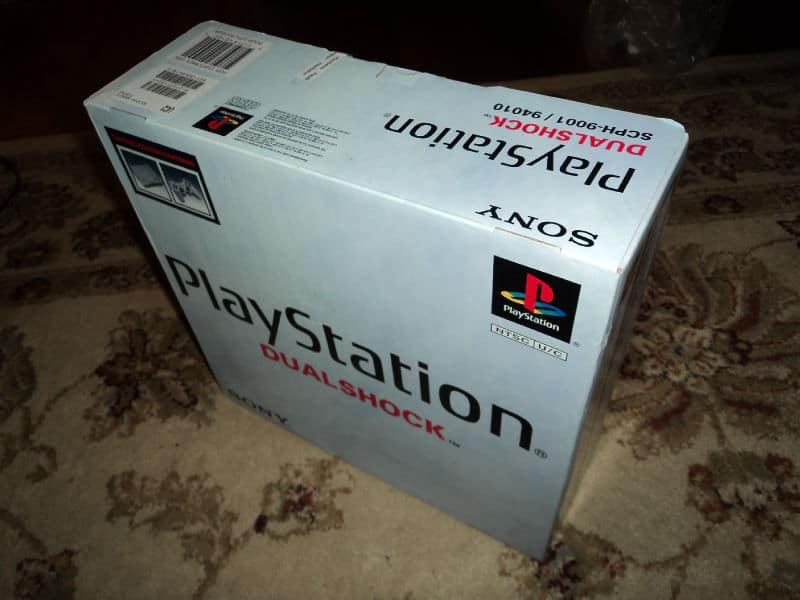
I rediscovered gaming again in 1998 when my wife and I took a trip to another uncle's house for a big family get together weekend, and my younger cousin had his PlayStation there.  We spent the better part of that weekend pouring over Tekken 2, and my wife decided at that point that we needed a PlayStation.  We bought one, got Tekken 2 and Tekken 3, and I also picked up a couple shmups and a copy of Final Fantasy VII.  Once again, I immersed myself in gaming, and though my Game Boy laid largely dormant during that period, I was still cultivating my love for gaming, and the memories of that earlier time were still part of what propelled me to continue to invest in games.  I spent a lot of time with that system, and it's still one of my favorites to this day.


Image shamelessly linked from GameSniped.
This DualShock PlayStation model is what I have, and
still have, complete in box.  I sunk a LOT of hours
into a whole cadre of games on this great system.

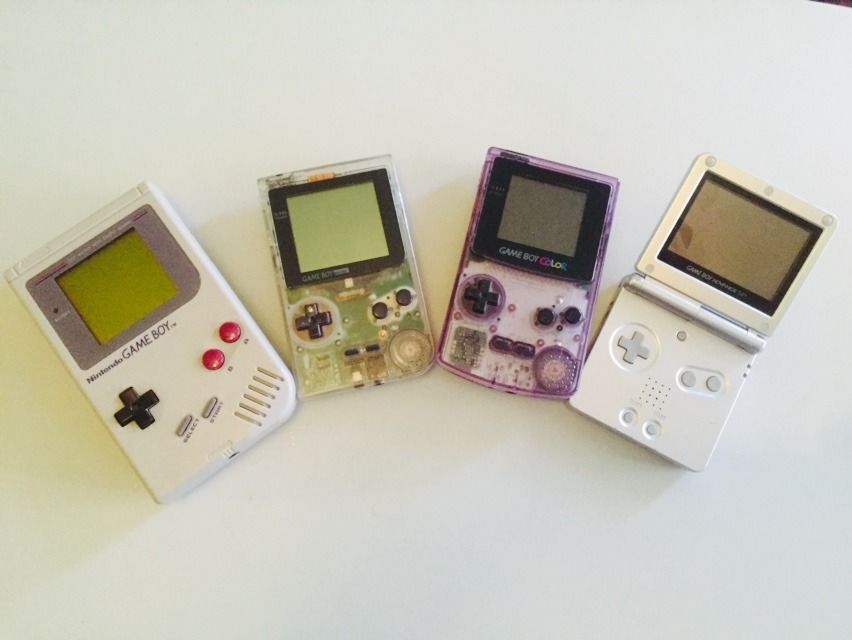
In 2000, I got the itch to get back into portable gaming again, so I picked up an Atomic Purple model of the Game Boy Color.  I could go back and play my existing Game Boy library, and then also some new games I picked up, like Bionic Commando Elite Forces, Project S-11, R-Type DX, Frogger, and even the goofy game The Smurfs' Nightmare.  Once again, I immersed myself in portable gaming, taking the unit with me on trips and to various places when I had the chance.  The screen was better, it only used 2 batteries instead of 4, was more truly portable, and I could plug in one of those ingenious "snake light" peripherals to give light to the screen without a giant, bulky attachment.  Suddenly, my original Game Boy library came alive again, some titles with a reasonable amount of color, and on a much improved display.

I missed out on the Game Boy Advance immediately, because I was concentrating on mostly console and PC gaming throughout much of the mid-2000's.  I didn't pick up a GBA until years later, sometime in 2008 or 2009, when I found a GBA SP very reasonably priced at a used game store.  Within a short period of time, once again, I found myself enjoying old Game Boy games, picking up more original Game Boy and Game Boy Color games I hadn't owned before, and also buying new Game Boy Advance games that had come out years before.  The advent of the backlit display was a huge bonus, and the GBA SP is still my handheld of choice for playing any of my Game Boy library.  My portable gaming life is now split between my GBA SP (and library of Game Boy family of games), and my Sony PSP, which my wife bought me for Christmas in 2005.  I occasionally cross over, playing some GB, GBC, or GBA titles on the PSP (via custom firmware and emulation, of course), in part, due to save states, and additional color options, but sometimes strictly out of convenience.


Image shamelessly linked from Wikimedia.
The stunning silver Game Boy Advance is my weapon
of choice when it comes to playing GB games on the go!

So now we come to the genesis (sorry, pun intended) of this project!  There are a number of folks who have endeavored to do full system reviews, which are game-by-game analysis of every title for the respective console(s) they've chosen.  You have Nintendo Legend, and Dylan Cornelius' Questicle project to review every North American NES title, and his subsequent descent into all things Sega with his Sega Does website and podcast.  You also have HuCard Heaven, for TurboGrafx and PC Engine games, and Sega Galactico, aka The Sega Legend, working his way through the Sega Genesis library.  Tom Hall, of the Breaking Bits Podcast, calls himself the N64 Connoisseur, and is attempting to review every North American N64 release. Not every system has a "Legend" working on the game library, but it's becoming more prevalent.  In the Game Boy space, there's GameBoyle, a fantastic YouTube series and Twitter account of a great resource for all things Game Boy.  There's also Game Boy World, a great resource of GB game reviews and information.

So why does the world need a Game Boy Guru?  I'm not sure it does, but as my conversation with Dylan Cornelius went (great dude, go follow him on Twitter right now!), the more people exploring the entire game libraries of each console, the better.  The more people that are uncovering the lesser known titles, milling through the shovelware, and truly highlighting the best games of a platform, the better off the retro gaming community will be.  My opinion may be just one in a sea of opinions, but I want to express it just the same.  This will be an outlet for me, but also a learning experience, since the vast majority of the Game Boy library remains undiscovered by me.  As much as I've enjoyed my Game Boy systems over the years, I'd love to play through a lot of the library.  I've been actively buying Game Boy, Game Boy Color, and Game Boy Advance games when I find them inexpensively, and have built a small, respectable library that will be a great place for me to start.

"It's dangerous to go alone, take one of these!"

I hope to build a near-complete collection of North American Game Boy releases, as well as eventually getting close to that with both the GB Color and GB Advance.  I will cover Japanese and European games if and when I can, based on when I can acquire them.  If the site gets good feedback and people are asking for content faster than I can acquire games, I may look into Patreon or some way folks can help me continue to acquire games for review.  I may also look into a YouTube channel, though my existing channel has been quite neglected of late.  Either way, I want to bring you my thoughts on the Game Boy family of handhelds, and I felt like now was the right time to start doing that.  Game on!