Showing posts with label Sega. Show all posts

Thursday, May 5, 2016

The Cultural Impact Of The Game Boy

Image shamelessly stolen from USGamer.  This ad really shows the diversity of the
Game Boy game library.  Represented here, we have 2 puzzle games, 2 racing games,
an action/platformer adventure title, an action puzzler, a beat-em-up, a shoot-em-up,
a sports game, a light-hearted action title, and a puzzle/adventure game.

I work in healthcare.  More specifically, I'm an "IT guy", one of those overly geeky "computer nerds" who takes care of all things technology.  I work for a hospital, and we work, in turn, with a local nursing home.  I was visiting that location a few weeks ago, when I was struck by a conversation I overheard.  There was some apparent shuffling that needed to take place of some people within the organization, and the woman who was doing most of the talking stated that they need to effectively "play Tetris" with some people and some rooms.  This woman is probably a few years younger than I am, and she was speaking to another person who is several years older.  Both parties knew what the other was talking about, and the Tetris comment was clearly understood.  This isn't the only gaming-related phrasing or metaphor I've heard from people I wouldn't consider to be "gamers" in the traditional sense, but as I've begun to collect a large number of Game Boy carts, and consumed a lot of related content on the internet, it got me thinking about the long-term cultural impact of the Game Boy, and the legacy it has created.

The ubiquity of Tetris is due, in no small part, to Nintendo wisely choosing to include it with the original Game Boy upon its launch in North America.  Sure, everyone knows now what a great game Tetris is, but looking back 30 years ago, who would have thought that an obscure, Russian-designed computer puzzle game would have had such widespread appeal and acclaim?  Who would have guessed that the game would be referenced in casual conversation like my example above, talking about having to rearrange things, much like you do in the game?  I seriously doubt many would have had the foresight to predict such a thing.  Nintendo themselves knew they had a hit on their hand, when they licensed it for the home console market, but I don't think anyone at Nintendo could have foreseen the runaway success their little handheld would bring them.


Image shamelessly linked from Alchetron.
The fact that Alexey Pajitnov isn't a multi-millionaire because of Tetris
is a sad result of the USSR, as well as the perils of software licensing.

If you look at handheld gaming from the mid-1970's until 1989 when the Game Boy was introduced, you'll find that while Nintendo wasn't the first to offer a portable gaming system with interchangeable cartridges, they were the first to do so successfully.  Most famously, the first handheld game console with individual cartridges was Milton Bradley's Microvision in 1979, though its relatively modest success was short-lived, and the line was discontinued in 1981.  A few other companies put products into the market between 1981 and the Game Boy's North American debut in 1989, but none of them were met with much success, and often had a lot of shortcomings due to utilizing relatively old technology.  Nintendo's entry into the handheld gaming console market (not just single-game portable machines) was a landmark that would forever alter the course of gaming.

The interesting thing was, as the technology to make a powerful, handheld gaming system came into being, Nintendo wasn't the only company to be developing such a concept.  Epyx, a software company fresh off a handful of successful titles, began developing their own handheld gaming device in 1986, nearly a year before Game Boy designer Gunpei Yokoi began work on his handheld system.  Epyx didn't have the financial capabilities to mass produce their "Portable Computer Entertainment System", however, so Atari Corp. stepped in to help them make it a reality.  If only the Atari Lynx had debuted 6 months ahead of the Nintendo Game Boy, instead of the other way around, the gaming landscape might be somewhat different than it is today.  Would the Lynx have sold enough at its initial $179.99 price point to keep Nintendo from totally dominating the handheld gaming market?  Probably not, but the Game Boy might have been a bit less ubiquitous, and the poor Lynx might have become more than just the forgotten competitor from the worn out Atari.
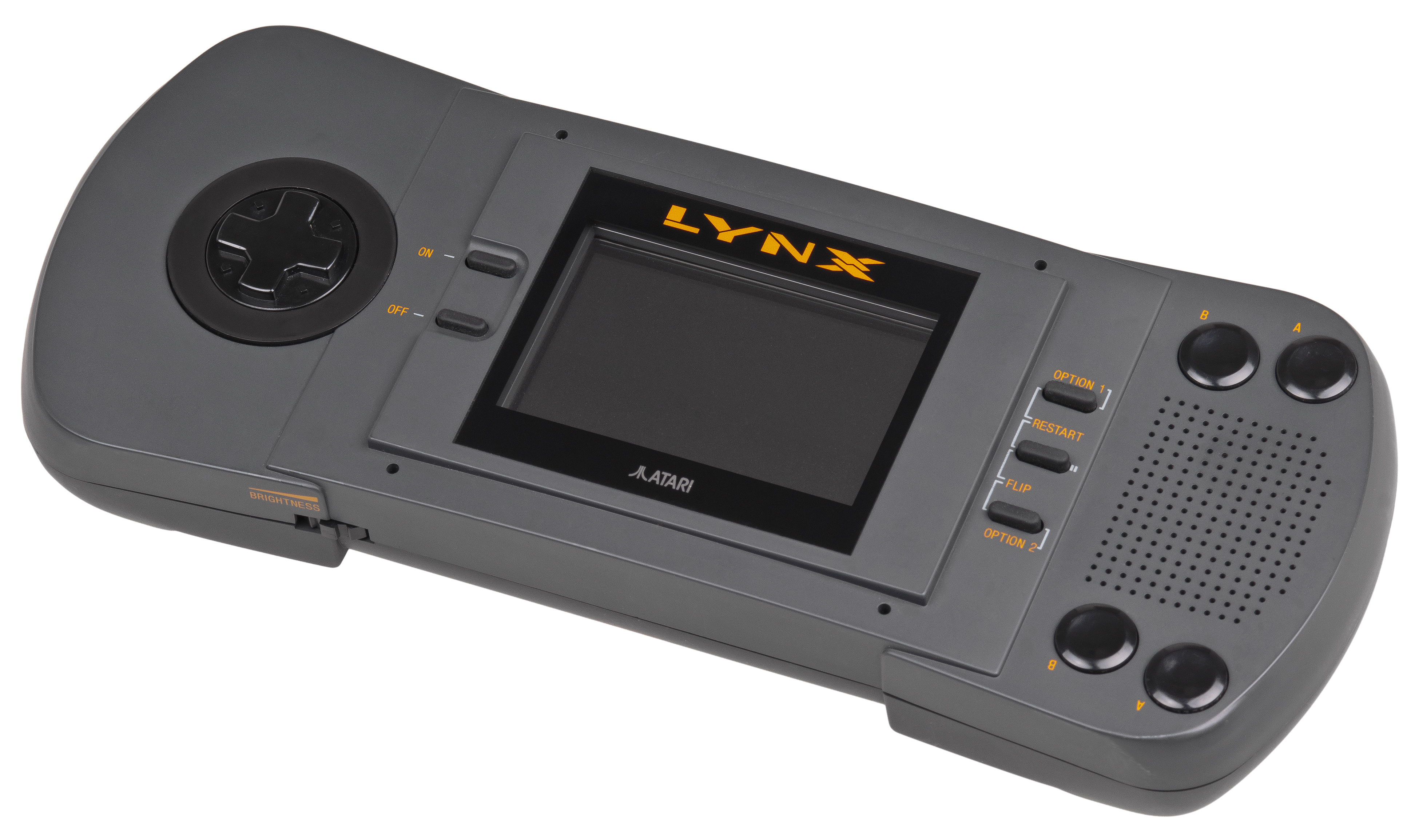

The initial model of the Atari Lynx was quite large, and not nearly as portable as Nintendo's
Game Boy system, despite the latter still being a large, white plastic brick on its own.

While Tetris was a large part of the success of the Game Boy, due to its near-universal appeal, the fact that Nintendo marketed the Game Boy so well is another factor that contributed to its runaway success.  Unlike the Nintendo of the last decade or so, Nintendo in the late 1980's was dominating the market, but that didn't stop them from advertising their new product to anyone and everyone.  It was marketed as a fun system with a lot of games for kids.  It was marketed as "edgy" and "cool" to the teenage set.  It was also marketed toward adults, as a diversion from the doldrums of daily life.  Nintendo reaped the reward for all their efforts, as history has shown us, because the Game Boy line sold in the tens of millions within its first few years.


Nintendo successfully fused then-modern music and fast image cuts
with game footage to produce this kid-centric commercial.

Look at this hip 1989 teenage boy with his cool denim jacket, his, "I'm
ready for 1990" haircut, and his hot sneakers! Nerds like me, when I
was in school, would have looked up to him and his Game Boy.

I'd never seen this particular Game Boy TV spot before, but it truly
demonstrates the scope of Nintendo's advertising plan for the Game
Boy handheld. Serious, hard-working adults were just as much a
target as children, and many bought into the hype.

This is the adult-focused Game Boy commercial I remember seeing
as a kid, often watching prime time TV with my parents. Of course,
they weren't interested in such things, but many adults caught the fever.

Nintendo continues to dominate the dedicated handheld gaming market today, though the ubiquitous nature of smart phones has begun to eat into the overall market share.  Still, the fact that we're even playing games on our phones is itself a tribute to what Nintendo accomplished by putting real video games into our hands, not just LCD screens with static images and little interactivity.  The Game Boy was the first system to market that gave the consumer a true video game experience on the go, and it was affordable to do so.  They also wisely chose to include the ability to connect two Game Boy systems together via the Link Cable accessory, which came with the initial hardware, and worked with the system's pack-in game, as well as 2 of the other 5 US launch titles.  I spent many hours as a kid linking up with friends for head-to-head Tetris and Dr. Mario sessions, and after buying F-1 Race, I even got to play that against a friend or two.  It was the first time handheld gaming could be truly competitive as well, a feature that may well have been part of the inspiration for much of the online gaming boon many years later.

Another interesting thing about the Game Boy is that, despite the handheld lasting for nearly 10 years on the market (from its debut in April 1989 to the debut of the Game Boy Color in November 1998), there are only just over 500 original titles for the system.  Several games received "Million Seller" re-issues, and some games were later reissued by other publishers (such as Sunsoft re-issuing the Final Fantasy Legend games), but the total number of original, licensed games released in North America was just a shade over 500.  It seems odd that the Game Boy had so few games compared to the NES, which had somewhere in the 700+ range.  Having said that, the Game Boy did have basically twice the size of library as its closest competitor, Sega's Game Gear, and it dwarfed the library of the Atari Lynx, which topped out around 50 titles.  Despite all this, there are a number of Game Boy games that went on to spawn game series that have had lasting effects over the years.  From the sleeper hit Gargoyle's Quest (that produced 2 console sequels) to Kirby's Dream Land, which continues today in new and interesting iterations, and of course, the pervasive Pokémon series, which sold nearly 10 million copies in the United States alone, and as history has shown, became a worldwide phenomenon, right at the end of the Game Boy's life, all thanks to some innovative gameplay mechanics and the monster collection theme.  For a system 1 month away from the end of its life to have a game that became one of the system's best selling stand-alone titles is no easy feat.

This iconic clip is from the 1990's TV series, Picket Fences. I wasn't
allowed to watch the show, perhaps for obvious reasons, since the
themes of the show were a bit more mature in nature, but the sheer
mainstream saturation of the Game Boy was present in this show,
which was targeted more at adults and teens than kids.

It's easy to look back 25+ years and say that the Game Boy was a resounding success.  By contrast, I understand why some say that Nintendo is floundering with the Wii U, and to a lesser extent, their 3DS line-up of handheld systems, despite that continuing to be a money maker.  Even so, the market is a much different place now than it was during the time of the Game Boy, and there's far more competition for the same gaming space these days.  Smartphones have taken over where Nintendo's white brick once ruled, and even the 3DS (and Sony's poor Vita) struggles to continue to find an audience, amid free-to-play tower defense and puzzle games.  Still, all the hipsters, millennials, and soccer moms crushing candy and slashing fruit like a ninja owe the lion's share of that ubiquity to Nintendo, and their little handheld game system that could.  Without the Game Boy to begin that portable gaming revolution, you probably wouldn't be reading this article, because the lasting legacy of the Game Boy would have been far less important than it actually is.  For that, we all owe Nintendo a debt of gratitude.  I know my life would be less interesting without having spent a lot of time with my Game Boy as a kid, and even in more recent years as I've rekindled a love for the hobby.


Tuesday, March 24, 2015

Introduction to the Game Boy Guru


My name is Josh, and I've been playing video games, in some form, since I was 5 years old.  I first experienced the thrill of video games at the ripe young age of 5, at a family get together.  My uncle brought his Atari 2600 console, and between Pac-Man, Combat, Battlezone, and a handful of other titles, I was completely smitten with the idea of controlling some small, multi-pixel object on the screen.  Every time we would get together with family, I hoped one of my uncles would bring their Atari 2600.  Every time I'd visit friends, I would beg them to play video games.  And eventually, I would own my own gaming platform, but more on that later.

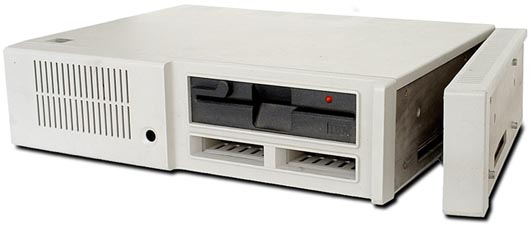
After having been exposed to the Atari 2600 through family members, and then computer gaming through another uncle, my parents bought a family computer.  Mostly, my dad wanted to be able to do productivity stuff with it, but as much time as I could spend on it, I did, playing various shareware games and games designed for the system.  And while we were late to the game, owning the IBM PCjr well after its marketability had all but dried up, that little machine gave me countless hours of joy.  I had adventures with King's Quest, played hoops with One on One Basketball, destroyed property as a Paperboy, and spent hours exploring space and discovering new life forms with Starflight.  Until I started buying games that didn't really work on the PCjr, due to the limitations of RAM (and no hard drive), that computer was the perfect outlet for my early gaming curiosity.


Image shamelessly linked from Old Computers.  Our PCjr had multiple "sidecar"
upgrades to boost it from the stock 128KB to a smoking 640KB of RAM!


My parents wouldn't buy me a dedicated games console, in part, because they said I would monopolize the TV.  They were right, I absolutely would have.  I did have a short stint with my uncle's 2600 when he let me borrow it during part of a summer.  Sadly, the somewhat broken joysticks led me to fits of young gamer rage, which prompted my mom to pack it up and send it back to him.  Once again, I was relegated to just my PCjr, and various friends' consoles, to get my gaming fix.  Thankfully, my next door neighbor had a 2600, NES, and even an original Magnavox Odyssey, and was happy to have me come by any time to play games with him.

There was light at the end of the tunnel, however.  Though my parents wouldn't allow me to own a home console, with only 1 TV set in the house, they did say I could buy a Game Boy, provided I bought it with my own money.  I didn't get that much in allowance money, but I dutifully saved my cash, rather than spending it on G.I. Joe figures, and saved up until my 13th birthday, April 1990.  I bought the Game Boy, complete with Tetris cartridge, and my parents bought me Castlevania: The Adventure as my birthday gift.  It was a glorious birthday, potentially one of the best ever.


Image shamelessly linked from Wikipedia.  This game
was an integral part of my early Game Boy experience.
It was an impressive use of the modest Game Boy hardware.

What followed over the next 2 years was pure childhood gaming bliss.  I bought over a dozen classic Game Boy games: Super Mario Land and its sequel, Alleyway, F-1 Race, Teenage Mutant Ninja Turtles: Fall of the Foot Clan, Kid Icarus: Of Myths and Monsters, Gargoyle's Quest, Final Fantasy Legend, Duck Tales, Dr. Mario, and several others.  I poured a lot of time into my Game Boy, and every time my family went to visit my grandparents or other relatives, I had my trusty Game Boy with me.  When I stayed overnight with friends, we each had our Game Boys with link cables, ready to duke it out in Tetris, Dr. Mario, or whatever other 2-player extravaganza we both had.  I also spent countless hours in my bedroom, fighting and clawing to reach the end of Castlevania and Gargoyle's Quest, and a lot of time perfecting my 4-row technique in Tetris.  It was a magical time.

Sadly, that time came to an end in 1992, when I decided that I absolutely had to have a Sega Genesis.  My parents were buying a new TV, so that opened up the possibility that my younger brother and I could buy their old TV, pool our money together and buy a Genesis, so we could experience the awesome power of the system.  I had already played Last Battle, Golden Axe, and the awe-inspiring Sonic the Hedgehog at a classmate's house, and I knew that was what I wanted.  I still didn't have that much money, however, so I ended up selling my Game Boy and all my games to pay for the Genesis.  I don't regret buying, owning, or playing the Genesis, because it's still one of my favorite systems, and I have a ton of great memories of that.  I just wish, in hindsight, that I hadn't let go of my entire collection of complete-in-box Game Boy titles, especially F-1 Race, because I had the 4-player adapter with it.


Image shamelessly linked from GameTrog.
This Genesis model is the one I sold my
Game Boy to obtain.  I still have the system and
box and still use them today.


Thankfully, I recognized my egregious error 2 years later, and when my best friend from school decided to sell his Game Boy, I bought it from him without a moment's hesitation.  Granted, I didn't get back the boxes and manuals, but I did reacquire some favorites like Tetris, the original Super Mario Land, and Alleyway.  I soon purchased Dr. Mario and Duck Tales again, and was reliving the fun of owning a portable system once again.  I snagged Super Mario Land 2: The Six Golden Coins (still have that complete-in-box!), and loved it, as well as a handful of other games, to eventually get back nearly all the titles I enjoyed just a few short years earlier.  By the time I graduated high school, however, I wasn't gaming much, in part because all my money was going toward dating my girlfriend.

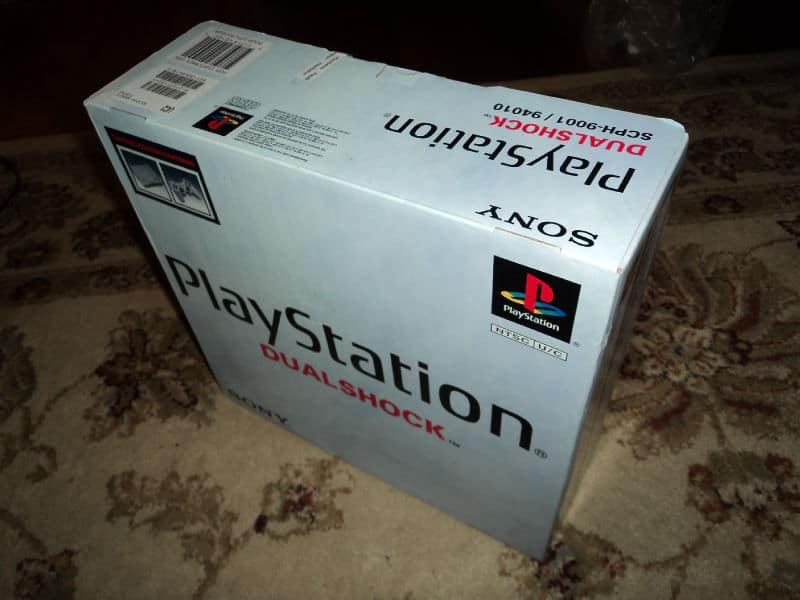
I rediscovered gaming again in 1998 when my wife and I took a trip to another uncle's house for a big family get together weekend, and my younger cousin had his PlayStation there.  We spent the better part of that weekend pouring over Tekken 2, and my wife decided at that point that we needed a PlayStation.  We bought one, got Tekken 2 and Tekken 3, and I also picked up a couple shmups and a copy of Final Fantasy VII.  Once again, I immersed myself in gaming, and though my Game Boy laid largely dormant during that period, I was still cultivating my love for gaming, and the memories of that earlier time were still part of what propelled me to continue to invest in games.  I spent a lot of time with that system, and it's still one of my favorites to this day.


Image shamelessly linked from GameSniped.
This DualShock PlayStation model is what I have, and
still have, complete in box.  I sunk a LOT of hours
into a whole cadre of games on this great system.

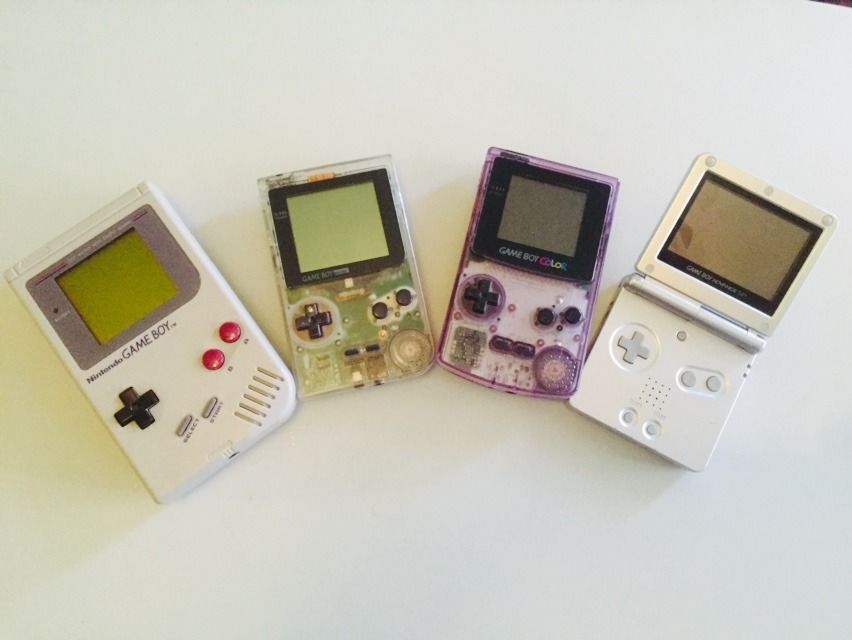
In 2000, I got the itch to get back into portable gaming again, so I picked up an Atomic Purple model of the Game Boy Color.  I could go back and play my existing Game Boy library, and then also some new games I picked up, like Bionic Commando Elite Forces, Project S-11, R-Type DX, Frogger, and even the goofy game The Smurfs' Nightmare.  Once again, I immersed myself in portable gaming, taking the unit with me on trips and to various places when I had the chance.  The screen was better, it only used 2 batteries instead of 4, was more truly portable, and I could plug in one of those ingenious "snake light" peripherals to give light to the screen without a giant, bulky attachment.  Suddenly, my original Game Boy library came alive again, some titles with a reasonable amount of color, and on a much improved display.

I missed out on the Game Boy Advance immediately, because I was concentrating on mostly console and PC gaming throughout much of the mid-2000's.  I didn't pick up a GBA until years later, sometime in 2008 or 2009, when I found a GBA SP very reasonably priced at a used game store.  Within a short period of time, once again, I found myself enjoying old Game Boy games, picking up more original Game Boy and Game Boy Color games I hadn't owned before, and also buying new Game Boy Advance games that had come out years before.  The advent of the backlit display was a huge bonus, and the GBA SP is still my handheld of choice for playing any of my Game Boy library.  My portable gaming life is now split between my GBA SP (and library of Game Boy family of games), and my Sony PSP, which my wife bought me for Christmas in 2005.  I occasionally cross over, playing some GB, GBC, or GBA titles on the PSP (via custom firmware and emulation, of course), in part, due to save states, and additional color options, but sometimes strictly out of convenience.


Image shamelessly linked from Wikimedia.
The stunning silver Game Boy Advance is my weapon
of choice when it comes to playing GB games on the go!

So now we come to the genesis (sorry, pun intended) of this project!  There are a number of folks who have endeavored to do full system reviews, which are game-by-game analysis of every title for the respective console(s) they've chosen.  You have Nintendo Legend, and Dylan Cornelius' Questicle project to review every North American NES title, and his subsequent descent into all things Sega with his Sega Does website and podcast.  You also have HuCard Heaven, for TurboGrafx and PC Engine games, and Sega Galactico, aka The Sega Legend, working his way through the Sega Genesis library.  Tom Hall, of the Breaking Bits Podcast, calls himself the N64 Connoisseur, and is attempting to review every North American N64 release. Not every system has a "Legend" working on the game library, but it's becoming more prevalent.  In the Game Boy space, there's GameBoyle, a fantastic YouTube series and Twitter account of a great resource for all things Game Boy.  There's also Game Boy World, a great resource of GB game reviews and information.

So why does the world need a Game Boy Guru?  I'm not sure it does, but as my conversation with Dylan Cornelius went (great dude, go follow him on Twitter right now!), the more people exploring the entire game libraries of each console, the better.  The more people that are uncovering the lesser known titles, milling through the shovelware, and truly highlighting the best games of a platform, the better off the retro gaming community will be.  My opinion may be just one in a sea of opinions, but I want to express it just the same.  This will be an outlet for me, but also a learning experience, since the vast majority of the Game Boy library remains undiscovered by me.  As much as I've enjoyed my Game Boy systems over the years, I'd love to play through a lot of the library.  I've been actively buying Game Boy, Game Boy Color, and Game Boy Advance games when I find them inexpensively, and have built a small, respectable library that will be a great place for me to start.

"It's dangerous to go alone, take one of these!"

I hope to build a near-complete collection of North American Game Boy releases, as well as eventually getting close to that with both the GB Color and GB Advance.  I will cover Japanese and European games if and when I can, based on when I can acquire them.  If the site gets good feedback and people are asking for content faster than I can acquire games, I may look into Patreon or some way folks can help me continue to acquire games for review.  I may also look into a YouTube channel, though my existing channel has been quite neglected of late.  Either way, I want to bring you my thoughts on the Game Boy family of handhelds, and I felt like now was the right time to start doing that.  Game on!